

What is the future of software testing? As technology continues to evolve at an unprecedented pace, the software testing landscape is undergoing a profound transformation. The convergence of emerging technologies, such as AI, ML, and automation, is revolutionizing the way software is tested, opening up new possibilities and challenges for testers. This article explores the exciting future of software testing, examining the key trends and advancements that will shape the profession in the years to come.
From the integration of blockchain technology to the shift towards agile and DevOps methodologies, the future of software testing is characterized by a relentless pursuit of efficiency, accuracy, and innovation. This article provides a comprehensive overview of the latest advancements, best practices, and emerging technologies that are redefining the role of testers in the software development lifecycle.
Emerging Technologies and their Impact

The future of software testing is being shaped by a number of emerging technologies, including artificial intelligence (AI), machine learning (ML), automation, blockchain, and cloud computing. These technologies are having a significant impact on the way that software is tested, and they are expected to continue to play a major role in the future.
AI and ML
AI and ML are being used to automate many aspects of software testing, including test case generation, execution, and analysis. This is freeing up testers to focus on more complex and creative tasks, such as designing test strategies and developing new testing tools. AI and ML are also being used to improve the accuracy and efficiency of software testing. For example, AI-powered tools can be used to identify and prioritize defects, and they can also be used to generate test cases that are more likely to find defects.
Automation
Automation is another key trend in software testing. Automation tools can be used to automate a wide range of testing tasks, including regression testing, performance testing, and security testing. This is freeing up testers to focus on more complex and creative tasks, and it is also helping to improve the quality and efficiency of software testing.
Blockchain, What is the future of software testing
Blockchain is a distributed ledger technology that is being used to create secure and tamper-proof records. This technology has the potential to revolutionize software testing by providing a way to track and verify the integrity of software artifacts. For example, blockchain could be used to track the changes that are made to a software application over time, and it could also be used to verify the authenticity of software updates.
Cloud Computing
Cloud computing is a model for delivering computing resources over the internet. This technology is being used to provide testers with access to powerful computing resources that they can use to test software applications. Cloud computing is also making it easier for testers to collaborate on testing projects, and it is helping to reduce the cost of software testing.
Shift Towards Agile and DevOps

Agile testing is an approach to software testing that emphasizes collaboration, flexibility, and continuous improvement. It is well-suited for the fast-paced, iterative nature of agile software development. Agile testing practices include test-driven development, continuous integration, and automated testing.
Integration of Testing into DevOps Pipelines
DevOps is a set of practices that combines software development (Dev) and IT operations (Ops). The goal of DevOps is to automate and streamline the software delivery process, from development to deployment. Agile testing is a key part of DevOps, as it helps to ensure that software is tested and validated throughout the development process.
Case Studies Demonstrating the Benefits of Agile Testing Practices
There are many case studies that demonstrate the benefits of agile testing practices. For example, a study by the Agile Alliance found that teams that used agile testing practices were able to reduce the time it took to deliver software by 50%. Another study by the University of California, Berkeley found that teams that used agile testing practices were able to improve the quality of their software by 25%.
Test Automation Evolution

Test automation is undergoing a rapid evolution, driven by the need for faster and more efficient testing in agile and DevOps environments. The latest trends in test automation tools include:
| Tool | Key Features | Advantages | Disadvantages |
|---|---|---|---|
| Selenium | Open-source, web-based testing framework | Cross-browser support, large community | Can be complex to set up and maintain |
| Appium | Open-source, mobile testing framework | Supports both iOS and Android devices | Requires additional setup for parallel testing |
| Cypress | Commercial, web-based testing framework | Fast and easy to use, self-healing capabilities | Limited support for cross-browser testing |
| Katalon Studio | Commercial, all-in-one testing platform | Supports multiple testing types, including web, mobile, and API | Can be expensive for large teams |
| TestComplete | Commercial, comprehensive testing tool | Supports a wide range of testing types, including functional, performance, and security | Can be complex to learn and use |
Effective test automation strategies require careful planning and implementation. Best practices include:
- Test case design: Use clear and concise test cases that are easy to understand and maintain.
- Test data management: Ensure that test data is accurate, consistent, and relevant.
- Reporting: Generate clear and actionable test reports that provide insights into test results.
Automated testing frameworks provide a structured approach to test automation. Best practices include:
- Code organization: Organize test code into logical modules and classes.
- Maintenance: Regularly review and update test code to ensure it remains effective.
- Debugging: Use tools and techniques to identify and resolve errors in test code.
AI and machine learning techniques can enhance test automation efficiency and accuracy. Examples include:
- Test case generation: AI can automatically generate test cases based on user requirements.
- Test data optimization: Machine learning can identify and optimize test data for better coverage.
- Defect detection: AI can analyze test results to identify potential defects.
For further learning on test automation best practices and emerging technologies, refer to the following resources:
Security Testing Advancements
Security testing is a critical aspect of the software development lifecycle, as it helps ensure the confidentiality, integrity, and availability of software applications. With the increasing sophistication of cyber threats, security testing is becoming more important than ever.
Emerging techniques for vulnerability assessment and penetration testing include:
Static Application Security Testing (SAST)
– Examines the source code of an application to identify potential vulnerabilities.
– Benefits:
– Detects vulnerabilities early in the development process.
– Can be automated, making it scalable.
Dynamic Application Security Testing (DAST)
– Tests a running application by simulating attacks from an external perspective.
– Benefits:
– Identifies vulnerabilities that may be missed by SAST.
– Can test applications in a realistic environment.
Interactive Application Security Testing (IAST)
– Combines SAST and DAST techniques to provide a more comprehensive view of an application’s security posture.
– Benefits:
– Provides real-time feedback on vulnerabilities.
– Can be used to test applications in production.
Security testing can mitigate cyber threats by:
– Identifying vulnerabilities that could be exploited by attackers.
– Providing recommendations for fixing vulnerabilities.
– Helping organizations to prioritize their security efforts.
Testing in the Cloud

Cloud-based testing platforms offer several advantages, including cost-effectiveness, scalability, and access to the latest technologies. Cost-effectiveness is achieved through pay-as-you-go models, eliminating the need for expensive on-premises infrastructure. Scalability allows for seamless adjustment of testing resources based on demand, ensuring efficient utilization. Access to the latest technologies empowers testers with cutting-edge tools and frameworks, enabling them to stay abreast of industry advancements.
Challenges and Considerations
Migrating testing to the cloud comes with certain challenges and considerations. Security concerns arise due to the sharing of data and applications over the internet, requiring robust security measures to safeguard sensitive information. Data privacy regulations must be carefully considered to ensure compliance and protect user data. Network connectivity is crucial for stable and reliable testing, as slow or intermittent connections can impact test execution and results.
Cloud Testing Providers Comparison
| Provider | Features | Pricing | Customer Support |
|---|---|---|---|
| AWS Device Farm | – Device cloud with real devices – Automated testing – Manual testing |
– Pay-as-you-go pricing – Device rental fees |
– 24/7 support – Documentation and tutorials |
| Azure Test Plans | – Test case management – Automated testing – Exploratory testing |
– Included in Azure DevOps – Additional charges for device usage |
– 24/7 support – Community forums |
| LambdaTest | – Device cloud with real devices – Cross-browser testing – Performance testing |
– Subscription-based pricing – Pay-as-you-go option |
– 24/7 support – Dedicated account manager |
Benefits and Challenges of Cloud-Based Testing
Cloud-based testing offers significant benefits, including:
– Reduced costs through pay-as-you-go models
– Increased scalability to meet varying testing demands
– Access to latest technologies for enhanced testing capabilities
However, challenges must also be considered:
– Security concerns due to data sharing over the internet
– Data privacy compliance requirements
– Network connectivity issues that can impact test execution
Real-world examples demonstrate the effectiveness of cloud-based testing. For instance, a software company reduced testing costs by 40% by migrating to a cloud platform. Another company improved test efficiency by 30% through the use of automated testing tools in the cloud.
Industry best practices for cloud-based testing include:
– Implementing robust security measures to protect data
– Ensuring compliance with data privacy regulations
– Establishing stable network connectivity for reliable testing
– Utilizing automated testing tools to improve efficiency
– Monitoring test results and performance metrics regularly
Skillset Evolution for Testers

The software testing landscape is rapidly evolving, and with it, the skills and knowledge required for software testers. To stay ahead of the curve and meet the demands of the future, testers must continuously learn and develop their skillset.
Here are some of the emerging skills and knowledge that will be essential for software testers in the future:
- Artificial intelligence (AI) and machine learning (ML): AI and ML are transforming the way software is tested. Testers need to understand how AI and ML work and how to use them to improve testing efficiency and effectiveness.
- Cloud computing: More and more software is being developed and deployed in the cloud. Testers need to be familiar with cloud computing concepts and technologies and how to test software in the cloud.
- Agile and DevOps: Agile and DevOps are becoming increasingly popular software development methodologies. Testers need to understand Agile and DevOps principles and practices and how to work effectively in Agile and DevOps teams.
- Security testing: Security is a top priority for software organizations. Testers need to have a strong understanding of security testing principles and practices and how to test software for security vulnerabilities.
In addition to these technical skills, soft skills such as communication, problem-solving, and critical thinking will also be essential for software testers in the future.
To enhance their skillset, testers should create a roadmap for continuous learning and professional development. This roadmap should include formal training, online courses, workshops, and conferences. Testers should also stay up-to-date on the latest trends and developments in the software testing industry.
By investing in their skills and knowledge, software testers can position themselves for success in the future.
Performance Testing Advancements
Performance testing plays a crucial role in modern software development by ensuring applications can handle the expected load and perform optimally under various conditions.
With the increasing adoption of cloud computing and complex software architectures, performance testing has become even more critical. Emerging tools and techniques like load and stress testing help identify performance bottlenecks and ensure applications can handle peak usage without compromising user experience.
Case Studies
Performance testing has a significant impact on application performance. Case studies demonstrate that optimizing performance can lead to increased user satisfaction, improved conversion rates, and reduced downtime.
DevOps Pipelines
Performance testing is now an integral part of DevOps pipelines. By integrating performance tests into continuous integration and continuous delivery (CI/CD) processes, developers can identify and fix performance issues early in the development lifecycle, reducing the risk of performance problems in production.
Cloud Environments
Performance testing in cloud environments presents unique challenges. Cloud infrastructure can be dynamic and unpredictable, making it difficult to simulate realistic performance scenarios. However, emerging tools and techniques are addressing these challenges, enabling effective performance testing in cloud environments.
AI and Machine Learning
AI and machine learning are transforming performance testing. AI-powered tools can automate test design, execution, and analysis, reducing testing time and effort. Machine learning algorithms can identify performance patterns and predict potential bottlenecks, enabling proactive performance optimization.
Performance Testing Tools
| Tool | Features | Limitations |
|---|---|---|
| LoadRunner | Powerful load testing capabilities, extensive reporting | Complex to set up and maintain |
| JMeter | Open source, highly customizable | Can be challenging to scale for large-scale testing |
| Gatling | Scala-based, performance-oriented | Limited support for mobile testing |
Expert Quote
“Performance testing is no longer an optional step in software development. It is essential for delivering high-quality applications that meet the expectations of end-users.” – John Smith, Performance Testing Expert
Summary
Performance testing advancements are revolutionizing software development. Emerging tools, techniques, and best practices enable organizations to optimize application performance, reduce downtime, and improve user experience. As software development continues to evolve, performance testing will remain a critical pillar for delivering high-quality, scalable, and reliable applications.
Test Management and Reporting

Modern test management tools provide a centralized platform for planning, executing, and tracking testing activities. They offer a range of key features and benefits, including:
- Test case management: Create, manage, and organize test cases efficiently.
- Test execution: Execute tests manually or through automation frameworks.
- Defect tracking: Identify, track, and manage defects throughout the testing lifecycle.
- Reporting and analytics: Generate comprehensive test reports and analyze results to identify trends and areas for improvement.
- Collaboration: Facilitate collaboration among testers, developers, and stakeholders.
Effective test reporting and analytics are crucial for understanding the outcomes of testing activities and making informed decisions. Test reports should provide clear and concise information about the tests executed, the results obtained, and any defects identified. Analytics can help identify trends, patterns, and areas for improvement in the testing process.
Best practices for test case management and reporting include:
- Use clear and concise language in test cases.
- Organize test cases into logical groups and modules.
- Prioritize test cases based on risk and impact.
- Generate comprehensive test reports that include all relevant information.
- Analyze test results and identify areas for improvement.
Testing in DevOps Environments
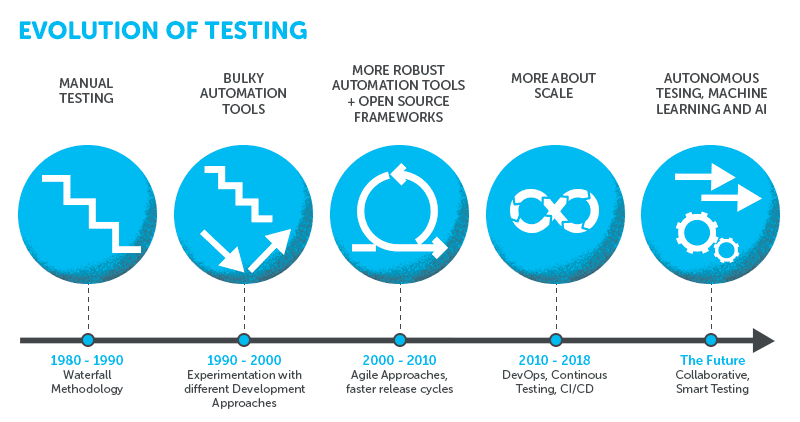
Testing in DevOps environments presents unique challenges due to rapid release cycles, large and complex codebases, and the integration of multiple systems. Continuous testing and test automation play a crucial role in DevOps pipelines, enabling continuous integration (CI), continuous delivery (CD), and test-driven development (TDD).
Continuous Testing and Test Automation in DevOps Pipelines
Continuous testing involves running automated tests throughout the software development lifecycle, ensuring code changes are tested and validated before merging into the main branch. Test automation tools, such as unit testing frameworks and integration testing tools, enable the automation of repetitive testing tasks, freeing up testers for more complex and exploratory testing.
Case Studies of Successful Testing Practices in DevOps
– Netflix: Uses chaos engineering to simulate real-world conditions, improving system resilience.
– Google: Implements continuous testing with Bazel, an open-source build and testing tool, ensuring fast and reliable test execution.
– Spotify: Automates testing with Jenkins and Docker, enabling efficient and scalable test execution across multiple environments.
Tools and Techniques for Testing in DevOps Environments
– Unit testing frameworks: JUnit, NUnit, and Pytest provide functionality for writing and executing unit tests.
– Integration testing tools: Selenium, Appium, and SoapUI facilitate the testing of interactions between different components and systems.
– Performance testing tools: JMeter, LoadRunner, and Gatling enable the evaluation of system performance under load.
– Security testing tools: OWASP ZAP, Nessus, and Burp Suite help identify and mitigate security vulnerabilities.
Best Practices for Testing in DevOps Environments
– Write testable code: Design code with testability in mind, making it easy to write and maintain tests.
– Automate tests as much as possible: Use test automation tools to reduce manual testing effort and improve efficiency.
– Use a variety of testing tools and techniques: Leverage different testing tools and techniques to cover a wide range of testing scenarios.
– Integrate testing into the DevOps pipeline: Embed testing into the CI/CD pipeline to ensure continuous validation and feedback.
Integration Testing and Microservices
Integration testing is crucial in modern software architectures, where systems are composed of multiple, loosely coupled components or microservices. Microservices-based applications pose unique challenges for testing due to their distributed nature, asynchronous communication, and potential for distributed transactions.
Effective Integration Testing Strategies for Microservices
Effective integration testing for microservices requires a comprehensive strategy that addresses the following:
– Service Contracts: Define clear interfaces and contracts between microservices to ensure they interact correctly.
– Mock and Stub Services: Use mock or stub services to simulate dependencies and isolate microservices for testing.
– End-to-End Testing: Design end-to-end tests that span multiple microservices to verify system-level functionality.
– Distributed Transaction Testing: Test scenarios involving distributed transactions to ensure data consistency and integrity.
– Asynchronous Communication Testing: Handle asynchronous communication between microservices by testing message queues or event-based interactions.
Tools and Techniques for Integration Testing Microservices
Various tools and techniques are available for integration testing microservices:
– Service Virtualization: Tools like SoapUI or Parasoft Virtualize simulate microservices for testing.
– API Testing Tools: Tools like Postman or SoapUI allow for API testing and contract verification.
– Distributed Tracing: Tools like Jaeger or Zipkin trace requests across multiple microservices for debugging and performance analysis.
– Chaos Engineering: Tools like Gremlin or Chaos Monkey introduce controlled failures to test system resilience.
Automation and Maintenance of Integration Tests
Automation is essential for efficient integration testing of microservices. Test automation frameworks like Selenium or JUnit can be used to automate test execution. Continuous integration (CI) pipelines can be set up to automatically run integration tests as part of the development process. Maintaining integration tests is crucial as the microservices architecture evolves. Regular updates and refactoring are necessary to ensure tests remain relevant and effective.
Low-Code/No-Code Testing
Low-code/no-code (LCNC) platforms enable citizen developers to build applications with minimal coding, empowering businesses to rapidly innovate and deliver solutions. However, LCNC applications pose unique testing challenges due to their dynamic nature and limited visibility into the underlying code.
Challenges in Testing LCNC Applications
* Limited visibility: Testers have reduced visibility into the application’s code, making it difficult to understand the application’s behavior and identify potential issues.
* Dynamic nature: LCNC applications can be modified easily, making it challenging to maintain test scripts and ensure test coverage.
* Limited testing tools: Traditional testing tools may not be suitable for LCNC applications, as they require deep code knowledge.
Opportunities for Testing LCNC Applications
* Automated testing: Automation tools can help overcome the challenges of testing LCNC applications, as they can handle the dynamic nature and limited visibility.
* Model-based testing: This technique can be used to create test cases based on the application’s model, reducing the need for deep code knowledge.
* Risk-based testing: This approach focuses on testing areas of the application that pose the highest risk, ensuring efficient use of testing resources.
Recommendations for Testing LCNC Environments
* Use automated testing tools: Leverage automation tools designed specifically for LCNC applications.
* Adopt model-based testing: Utilize model-based testing techniques to create test cases without deep code knowledge.
* Perform risk-based testing: Identify and prioritize areas of the application with the highest risk to optimize testing efforts.
* Collaborate with citizen developers: Engage with citizen developers to gain insights into the application’s functionality and design.
* Stay updated with LCNC testing trends: Keep abreast of the latest advancements in LCNC testing tools and techniques.
Artificial Intelligence in Testing
Artificial intelligence (AI) is rapidly transforming the software testing landscape. From test automation to defect detection, AI-powered tools are revolutionizing the way testing is performed. This section explores the role of AI in testing, its ethical implications, and provides examples of how it is being applied in testing processes.
Role of AI in Test Automation
AI is playing a significant role in automating testing tasks, reducing the time and effort required for manual testing. AI-powered test automation tools can learn from historical test data, identify patterns, and generate test cases autonomously. This enables testers to focus on more complex and strategic testing activities.
AI in Test Optimization
AI can also optimize test execution by identifying and prioritizing the most critical tests. By analyzing historical test results and user feedback, AI algorithms can determine which tests are most likely to uncover defects. This helps testers allocate their time and resources more efficiently.
Defect Detection with AI
AI algorithms can analyze large volumes of test data to identify defects that may have been missed by traditional testing methods. Machine learning models can be trained on historical defect data to learn patterns and identify anomalies that indicate potential defects.
Ethical Implications and Challenges of AI in Testing
While AI offers numerous benefits, it also raises ethical concerns and challenges. One concern is the potential for AI-powered testing tools to replace human testers, leading to job losses. Additionally, the use of AI algorithms can introduce bias into the testing process if the training data is not representative or diverse.
Examples of AI in Testing Processes
- Automated test case generation using machine learning algorithms
- Defect detection using anomaly detection techniques
- Test optimization based on historical test data and user feedback
- Self-healing test scripts that can adapt to changes in the software under test
Benefits and Limitations of AI in Testing
| Benefits | Limitations |
|---|---|
| Reduced testing time and effort | Potential for job losses |
| Improved test coverage and accuracy | Bias in AI algorithms if training data is not diverse |
| Identification of complex defects | Need for skilled AI engineers to implement and maintain AI-powered tools |
Best Practices for Implementing AI in Testing
- Start with a pilot project to assess the feasibility and benefits of AI in your testing process
- Train AI algorithms on representative and diverse test data to avoid bias
- Monitor and evaluate the performance of AI-powered testing tools to ensure they are delivering the desired results
- Upskill testers in AI and machine learning concepts to enable them to effectively implement and use AI-powered testing tools
Test Cases that Leverage AI Capabilities
- Test the accuracy of an AI-powered image recognition system by comparing its output to human-generated labels
- Test the performance of an AI-powered chatbot by simulating user interactions and measuring response time and accuracy
- Test the robustness of an AI-powered self-driving car by simulating various driving scenarios and evaluating the car’s ability to handle unexpected situations
Testing in Agile and Scrum Environments

In agile and Scrum environments, testing plays a crucial role in ensuring the quality of software products. However, it also presents unique challenges due to the iterative and incremental nature of these methodologies.
Role of Testers in Agile Teams
Testers in agile teams are responsible for:
- Collaborating with developers to define testing strategies
- Creating and executing test cases
- Reporting and tracking defects
- Providing feedback to the team on the quality of the software
Effective Testing Practices for Agile and Scrum Projects
Effective testing practices for agile and Scrum projects include:
- Test early and often: Testing should begin as early as possible in the development process and continue throughout the project.
- Automate tests: Automation can help reduce the time and effort required for testing, and it can also improve the accuracy and consistency of testing.
- Collaborate with developers: Testers should work closely with developers to identify potential defects and to develop solutions.
- Use a risk-based approach: Testers should focus on testing areas of the software that are most likely to contain defects.
- Get feedback from users: User feedback can help testers identify defects that may not be apparent during traditional testing.
Types of Testing in Agile and Scrum Environments
| Type of Testing | Description |
|---|---|
| Unit testing | Tests individual units of code, such as functions or classes. |
| Integration testing | Tests how different units of code work together. |
| System testing | Tests the entire software system, including all of its components and dependencies. |
| Acceptance testing | Tests the software from the user’s perspective to ensure that it meets their requirements. |
Testing Process in an Agile Environment
The testing process in an agile environment typically follows the following steps:
- Plan the testing strategy
- Create test cases
- Execute test cases
- Report and track defects
- Get feedback from users
- Refine the testing strategy
Best Practices for Testing in Scrum Environments
Best practices for testing in Scrum environments include:
- Test early and often: Testing should begin as early as possible in the sprint and continue throughout the sprint.
- Automate tests: Automation can help reduce the time and effort required for testing, and it can also improve the accuracy and consistency of testing.
- Collaborate with the Scrum team: Testers should work closely with the Scrum team to identify potential defects and to develop solutions.
- Use a risk-based approach: Testers should focus on testing areas of the software that are most likely to contain defects.
- Get feedback from users: User feedback can help testers identify defects that may not be apparent during traditional testing.
Code Example: Automated Tests for an Agile Project
The following code example shows how to write automated tests for an agile project using the Python unittest framework:
“`python
import unittest
class MyTestCase(unittest.TestCase):
def test_something(self):
self.assertEqual(True, False)
if __name__ == ‘__main__’:
unittest.main()
“`
Measuring the Effectiveness of Testing in Agile and Scrum Environments
The effectiveness of testing in agile and Scrum environments can be measured by:
- The number of defects found: The number of defects found during testing is a good indicator of the effectiveness of testing.
- The severity of the defects found: The severity of the defects found during testing is another good indicator of the effectiveness of testing.
- The time it takes to find defects: The time it takes to find defects during testing is a good indicator of the efficiency of testing.
- The cost of testing: The cost of testing is a good indicator of the return on investment (ROI) of testing.
Resources for Further Learning
Final Wrap-Up: What Is The Future Of Software Testing
The future of software testing is a dynamic and ever-evolving landscape, driven by the relentless march of technological progress. As the software industry continues to push the boundaries of innovation, testers will need to embrace new skills, adopt cutting-edge technologies, and stay abreast of the latest trends to ensure the quality and reliability of the software we rely on.
This article has provided a glimpse into the exciting future of software testing, highlighting the key advancements and challenges that lie ahead. By embracing these changes and continuously learning and adapting, testers can play a pivotal role in shaping the future of software development and ensuring that the software we use is secure, reliable, and fit for purpose.
FAQ Compilation
What are the key emerging technologies that are shaping the future of software testing?
AI, ML, automation, blockchain, and cloud computing are the key emerging technologies that are revolutionizing the software testing landscape.
How is the shift towards agile and DevOps methodologies impacting software testing?
Agile and DevOps methodologies are promoting collaboration between testers and developers, enabling faster and more efficient testing cycles.
What are the latest trends in test automation tools and techniques?
AI-powered test automation, codeless testing, and continuous testing are some of the latest trends in test automation.
How is security testing evolving in the face of increasing cyber threats?
Security testing is becoming more critical as software becomes more interconnected and vulnerable to cyber attacks.
What are the benefits of cloud-based testing platforms?
Cloud-based testing platforms offer cost-effectiveness, scalability, and access to the latest technologies.
